
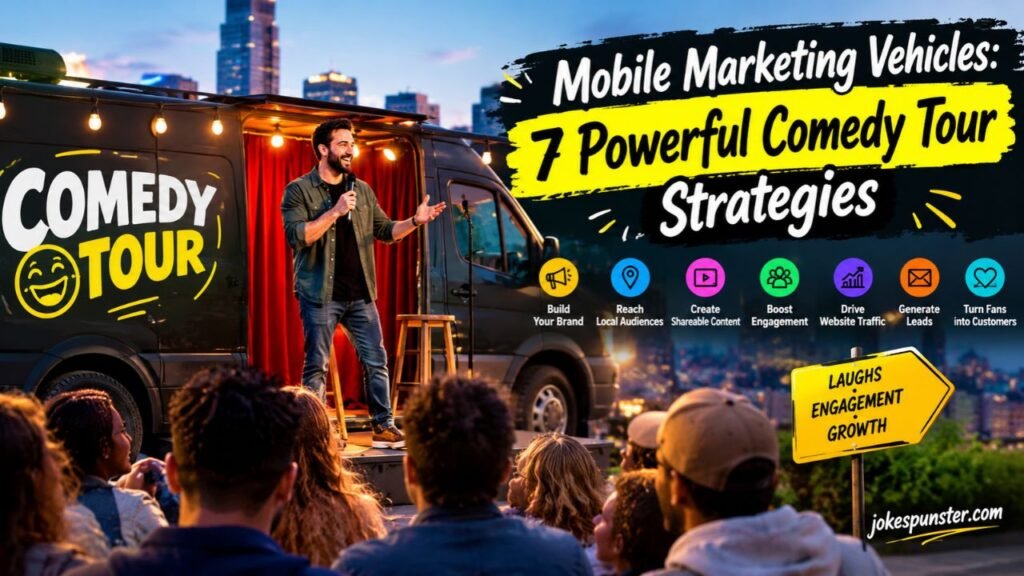

Mobile marketing vehicles are changing how comedians and event organizers promote live shows, attract local audiences, and build excitement before show night. Imagine driving through a busy entertainment district and spotting a colorful van advertising a comedian performing nearby this weekend. It catches your attention, makes you smile, and perhaps even encourages you to book a ticket. That’s the power of advertising on wheels. Unlike traditional posters that remain in one place, mobile advertising vehicles bring comedy tour promotions directly to potential audiences.
But there’s more to this strategy than eye-catching graphics. Smart route planning, memorable branding, QR codes, and social media can turn an ordinary vehicle into a valuable promotional tool. When used strategically, these elements can help comedy tours reach new fans and create lasting impressions.
What Are Mobile Marketing Vehicles?
Mobile marketing vehicles are cars, vans, trucks, or buses used to advertise brands, products, services, and events. For comedy tours, they provide a creative way to promote performances, increase local awareness, and encourage ticket sales.
How Mobile Advertising Vehicles Work
These vehicles display promotional messages through branded wraps, decals, banners, or permitted digital displays. They travel through selected areas or appear at approved events to reach potential customers.
A comedy tour campaign might include:
- The comedian’s name, photograph, and tour branding.
- Upcoming performance dates and venue details.
- QR codes linking directly to ticket pages.
- Social media handles and website addresses.
- Short, humorous slogans that attract attention.
The goal is straightforward: help people discover the show and make it easy for interested audiences to find tickets.
Popular Types of Vehicles Used for Promotion
Different vehicles suit different campaign sizes and budgets.
- Wrapped vans: Practical for local comedy shows and small touring teams.
- Promotional trucks: Provide larger surfaces for bold branding.
- Branded buses: Suitable for multi-city tours requiring consistent visibility.
- Compact cars: Useful for smaller campaigns with limited budgets.
- Digital advertising vehicles: Display electronic messages where local regulations permit.
The right option depends on the campaign’s duration, audience, route, and available budget.
Why Comedians and Event Organizers Use Them
Mobile advertising can help organizers introduce comedians to new audiences, promote upcoming shows, and maintain a recognizable tour identity.
A creative vehicle may also encourage photographs, social media mentions, and conversations about an event. However, visibility alone doesn’t guarantee ticket sales. Effective campaigns combine attractive designs with relevant locations and clear calls to action.
Why Mobile Marketing Works for Comedy Tours
Comedy tours compete with concerts, festivals, sporting events, and other entertainment options. Mobile promotions offer another way to make a performance stand out.
Reaching Local Audiences Before Show Night
Local awareness is important because potential attendees need to know when and where a performance takes place.
Organizers can schedule promotional routes near suitable shopping districts, university areas, entertainment neighborhoods, and other relevant locations. The message should communicate the comedian’s name, show date, venue, and ticket information clearly.
Turning Ordinary Streets Into Advertising Opportunities
Unlike a stationary billboard, a promotional vehicle can carry the same message through several neighborhoods.
Useful locations may include busy commercial areas, approved event spaces, and streets near theaters or comedy clubs. Organizers should prioritize audience relevance over traffic volume and follow local parking and advertising rules.
Creating Curiosity Around an Upcoming Comedy Show
Humor can make advertising memorable. A slogan such as “Your Weekend Plans Just Got Funnier” creates interest while keeping the message simple.
Still, clever wording shouldn’t hide important details. People should understand who is performing, when the event takes place, and how to find tickets.
7 Powerful Ways to Promote a Comedy Tour With Mobile Marketing Vehicles
1. Use Eye-Catching Vehicle Wraps and Comedy Branding
A vehicle wrap turns an ordinary van or truck into a moving advertisement. Use consistent colors, typography, photographs, and messaging across the vehicle, event posters, and social media.
Include the comedian’s name, a short headline, relevant tour information, and a readable website or QR code. Avoid clutter. People may see the vehicle for only a few seconds, so the main message must be immediately recognizable.
2. Promote Upcoming Shows in High-Traffic Areas
Plan routes around locations where potential ticket buyers are likely to spend time. Consider audience interests, traffic patterns, visibility, travel time, and local restrictions.
Start promotion several days before the event rather than relying entirely on show-day advertising. A smaller audience with a genuine interest in comedy may be more valuable than a large crowd with little chance of attending.
3. Build Buzz Near Theaters and Entertainment Districts
Entertainment districts can offer opportunities to reach people who already enjoy live performances.
Where permitted, coordinate vehicle promotions with comedy clubs, theaters, restaurants, or local businesses. Approved meet-and-greets and promotional displays can strengthen the campaign.
Always respect parking restrictions, pedestrian access, and neighboring businesses. The promotion should enhance the event experience rather than disrupt the area.
4. Add QR Codes for Tickets and Event Information
QR codes connect physical advertising with digital ticket booking. Interested people can scan a code to access the relevant event page without searching for the show themselves.
For better results:
- Link directly to the correct ticket page.
- Use a clear, high-contrast QR code.
- Test the code on multiple devices.
- Add a simple instruction, such as “Scan for Tickets.”
- Use trackable links to measure campaign engagement.
Place QR codes where people can scan them safely, such as on stationary displays. Never encourage drivers to scan a moving vehicle.
5. Connect Vehicle Campaigns With Social Media
Support street advertising with social posts, short videos, tour announcements, and behind-the-scenes content.
For example, a comedian could share a photograph of the branded van with the caption, “We’re bringing the laughs to town this Friday. Who’s coming?”
Use consistent branding and relevant hashtags, but don’t assume social engagement automatically translates into ticket sales. Track website visits and purchases separately.
6. Create Surprise Street Promotions and Fan Interactions
Interactive activities can make a comedy campaign more memorable. Depending on local permissions, organizers might arrange ticket giveaways, approved photo opportunities, brief meet-and-greets, or collaborations with local businesses.
Keep activities simple, accessible, and safe. Contests should have clear rules, and organizers should explain how any collected personal information will be used.
The aim is to create a positive experience that encourages people to learn more about the show.
7. Coordinate Vehicle Routes With the Comedy Tour Schedule
A promotional vehicle should follow the actual tour itinerary. Advertising the wrong city, an incorrect date, or a sold-out performance can waste resources and frustrate potential customers.
A simple schedule might look like this:
- One week before: Announce the performance and introduce the comedian.
- Three to four days before: Increase relevant local promotion.
- One or two days before: Share reminders and verified ticket information.
- Show day: Focus on permitted venue-area promotions and event details.
For multi-city tours, update the vehicle’s messages and QR codes for each destination.
How to Combine Mobile Advertising With Digital Marketing
Use Location-Based Social Media Campaigns
Run geographically targeted advertisements around the venue or relevant neighborhoods. Align the timing and message with the vehicle campaign to reinforce awareness.
Measure each channel separately instead of assuming that everyone who sees the vehicle will also see an online advertisement.
Encourage Fans to Share Photos and Videos
A well-designed vehicle can become a photo opportunity. Invite fans to share suitable pictures, use a campaign hashtag, or participate in approved promotional activities.
Repost user-generated content only with appropriate permission. Genuine audience participation is more valuable than forced engagement.
Retarget Interested Audiences With Ticket Ads
Where consent and applicable privacy rules allow, organizers can use advertising tools to reconnect with visitors who previously viewed ticket pages.
Show them relevant event reminders or verified offers. Avoid excessive advertising frequency, and make sure tracking practices comply with applicable privacy requirements.
Choosing the Right Vehicle for a Comedy Tour
Wrapped Vans and Trucks for Brand Visibility
Vans offer a practical balance of advertising space and mobility. Trucks provide larger surfaces but may have additional access and parking limitations.
Promotional Buses for Multi-City Tours
Branded buses can maintain a consistent identity across several destinations. However, fuel, insurance, maintenance, drivers, and parking must be included in the budget.
Compact Vehicles for Local Comedy Clubs
Smaller vehicles can suit neighborhood campaigns and independent comedy venues. Their limited advertising space makes simple designs particularly important.
Matching Vehicle Size to Budget and Audience
Before choosing a vehicle, consider the number of cities involved, campaign duration, audience locations, and available resources. Don’t pay for a large promotional vehicle if a smaller option can achieve the same objective.
How Much Does Mobile Comedy Tour Marketing Cost?
Costs vary by location, vehicle type, campaign duration, staffing, and design requirements. The following figures are illustrative planning estimates, not verified market prices.
Vehicle Rental, Wrapping, and Design Expenses
Potential expenses include vehicle rental, graphic design, printing, temporary decals, full wraps, and digital display equipment. Temporary graphics may suit short campaigns, while reusable wraps may offer better value for longer tours.
Fuel, Drivers, Permits, and Staffing Costs
Account for fuel, parking, insurance, driver wages, event staff, and any required permits. Check local regulations before using public spaces or promotional displays.
How to Build a Budget for a Small or Large Tour
Here is an example budget for a short local campaign.
| Expense | Estimated cost |
|---|---|
| Vehicle rental | $500 |
| Graphics and branding | $600 |
| Fuel and parking | $200 |
| Driver or staffing | $400 |
| Permits and miscellaneous expenses | $150 |
| Total | $1,850 |
These amounts are examples only. Actual prices may differ significantly, so obtain local quotations before committing to a campaign. Keep a contingency allowance for unexpected expenses.
Renting a Vehicle vs. Using an Existing Fleet
Renting may suit a one-time promotion, while using an existing vehicle can reduce rental expenses. However, both options involve potential costs for branding, insurance, labor, and operation.
Compare the total cost rather than making the decision based on rental price alone.
Measuring the Success of a Mobile Marketing Campaign
Track Ticket Sales and QR Code Scans
Use unique QR codes or tracking links for individual cities and campaigns. Monitor scans, ticket-page visits, completed purchases, and discount-code redemptions.
Not every person influenced by a vehicle will purchase through its tracking link, so interpret results carefully.
Measure Website Visits and Social Engagement
Review website traffic, social interactions, video views, and relevant audience growth. Compare results with previous events or similar periods to identify useful patterns.
Compare Promotional Costs With Ticket Revenue
Return on ad spend (ROAS) can be calculated as:
ROAS = Attributed ticket revenue ÷ Advertising cost
For example, a $1,000 campaign that generates $3,000 in attributable ticket revenue has a 3:1 ROAS. This isn’t the same as profit because ticketing fees, performer payments, and other expenses still apply.
Use Audience Feedback to Improve Future Campaigns
Ask attendees how they discovered the show through a short booking survey or optional post-event question. Use their responses to refine future routes, creative designs, and campaign timing.
Common Mobile Marketing Mistakes to Avoid
Choosing Routes Without Researching the Audience
Busy streets aren’t automatically effective. Research audience interests and prioritize locations relevant to the performance.
Using Cluttered Designs or Unclear Messages
Too much text makes an advertisement difficult to understand quickly. Prioritize the comedian’s name, show date, and a clear way to find tickets.
Ignoring Local Advertising Rules and Parking Restrictions
Check local requirements for vehicle advertising, public-space promotions, digital displays, and parking. Obtain permissions where necessary.
Failing to Track Campaign Performance
Without measurable goals, organizers may repeat expensive tactics that deliver little value. Define success before launch and review results after the event.
The Future of Mobile Marketing in Live Comedy
Interactive Vehicle Campaigns and Digital Experiences
Digital screens, QR codes, and mobile-friendly ticket pages can create more interactive campaigns where permitted. Choose technology that improves the audience experience rather than adding unnecessary complexity.
Data-Driven Routes and Audience Targeting
Historical ticket sales, venue locations, and campaign analytics can help organizers plan more relevant routes. Use audience data responsibly and follow applicable privacy requirements.
Sustainable Vehicles and Reusable Promotional Designs
Fuel-efficient vehicles, electric models, and reusable graphics may reduce certain operating or environmental costs. The best choice depends on travel distances, charging access, and the campaign’s practical requirements.
Frequently Asked Questions
What Is a Mobile Marketing Vehicle?
A mobile marketing vehicle is a car, van, truck, or bus used to advertise a brand, business, or event while traveling or operating at approved locations.
How Do Mobile Marketing Vehicles Promote Comedy Shows?
They display tour branding, performance details, promotional messages, and ticket links to help local audiences discover upcoming shows.
Are Mobile Advertising Vehicles Worth the Cost?
They can be worthwhile when the target audience, campaign budget, location, and measurable objectives justify the expense.
Can Small Comedy Clubs Benefit From Mobile Marketing?
Yes, small comedy clubs can use compact vehicles, temporary graphics, and focused local routes to promote nearby performances.
How Can Comedians Measure Results From Vehicle Advertising?
They can track QR scans, ticket purchases, website visits, discount-code redemptions, and audience feedback to evaluate campaign performance.
Conclusion
Mobile marketing vehicles offer comedy tour organizers a creative way to connect with local audiences and build excitement before show night. Eye-catching vehicle wraps, QR codes, targeted routes, and social media integration can help people discover performances and find ticket information more easily.
However, successful promotion takes more than a funny slogan on a van. Organizers need to understand their audience, choose relevant locations, manage costs, and measure campaign results. Whether promoting an independent comedy club or a multi-city tour, a carefully planned strategy can improve visibility and create memorable experiences. When creativity meets practical planning, the road becomes another opportunity to connect with comedy fans.