


Hermine Poitou may not be a familiar face on Hollywood red carpets, but her name has captured the curiosity of fans who want to know more about the woman married to Harry Potter star David Thewlis. While Thewlis has earned international recognition for his memorable screen performances, his wife has maintained a much quieter public presence. Their reported marriage in 2016 has sparked questions about who Hermine Poitou really is, what she does professionally, and how her life connects to the world of film fame. Behind the familiar celebrity connection lies a story that deserves to be explored with curiosity, care, and respect.
What makes Hermine Poitou more than just a celebrity spouse is her own creative identity. Described as a French designer, she has a documented connection to an illustrated mural at Aimé Césaire metro station in Paris, a project credited to her and graphic designer Catherine Félix by RATP, the city’s public transport authority. This glimpse into her professional work offers a different perspective on a woman whose public profile remains relatively limited. From her design work and marriage to David Thewlis to the value of maintaining privacy in a fame-focused world, let’s explore what reliable public information reveals about Hermine Poitou—and why a quieter life can be just as interesting as one lived in the spotlight.
A Name Often Linked to David Thewlis
For many readers, the first question is straightforward: who is Hermine Poitou?
She is a French designer and artist who is publicly known as the wife of British actor David Thewlis. People magazine has identified Poitou as Thewlis’s wife and reported that they married in 2016. Their relationship has attracted attention partly because Thewlis has maintained a successful career across several decades.
Thewlis is much more than a familiar face from the Harry Potter franchise. According to the Television Academy, he is an actor, director, screenwriter, and author. His work in the third season of Fargo, where he played V. M. Varga, also earned him an Emmy nomination.
With such a recognizable career, it is understandable that fans want to learn about the people closest to him. A spouse can become a subject of public curiosity even without pursuing fame independently.
However, the question of who Hermine Poitou is deserves more than a relationship label. Her documented design work offers an independent part of the story. It shows that she has a creative professional identity beyond her marriage.
That distinction matters. Knowing someone through their relationship with a celebrity is not the same as knowing everything about them. A thoughtful biography should introduce the connection while leaving room for the person’s own work, interests, and individuality.
The Quiet Side of Creative Work

Creative work does not always come with a public face. An actor’s performance is visible on a cinema screen, but a designer’s contribution may be experienced through an image, an illustration, a public space, or a carefully arranged visual composition.
Hermine Poitou’s work offers a practical example of this difference.
RATP, the Paris public transport authority, identifies Poitou and graphic designer Catherine Félix as the creators of a large illustrated mural at Aimé Césaire station on Metro Line 12. The mural celebrates the life and work of Aimé Césaire, the Martinican poet and political figure. It combines illustrations, patterns, and quotations drawn from his writing and interviews.
The project provides a concrete example of Poitou’s work in graphic design. Rather than relying only on descriptions repeated across celebrity websites, readers can point to a public project documented by the organization responsible for the transport network.
It also shows how design can influence an everyday experience. Thousands of people may pass through a station without knowing the names of the designers behind its visual identity. They can still encounter the work, notice its details, and benefit from the thought that went into it.
This is one of the most interesting aspects of creative professions. Recognition does not always belong to the individual who made the work. Sometimes, the finished design becomes the focus, while the person behind it remains relatively unknown.
There is no need to assume that Hermine Poitou deliberately chose anonymity or that she avoids professional recognition. The public record simply shows that her design work is more substantial than a biography focused only on her marriage would suggest.
David Thewlis and the Weight of Film Fame
David Thewlis has built a career that reaches far beyond one famous role. His filmography includes independent cinema, major studio productions, and television dramas. His performance in Mike Leigh’s Naked helped establish his reputation, while his portrayal of Remus Lupin introduced him to a much wider international audience.
He has also appeared in projects such as The Big Lebowski, The Boy in the Striped Pyjamas, and Fargo. The range of these roles demonstrates his ability to move between very different stories and characters.
A career of this kind naturally creates public interest. Interviews, reviews, award coverage, film databases, and fan discussions keep an actor’s name visible long after an individual production has ended.
That visibility can extend to family members and partners. People who might otherwise lead relatively private lives can find their names appearing in searches simply because they are connected to a recognizable performer.
Hermine Poitou occupies that position in the public imagination. Her name is frequently introduced through Thewlis, even though her own professional field is different.
Still, it would be unfair to turn this contrast into a claim about their personalities or private relationship. There is no need to suggest that one person enjoys attention while the other dislikes it. What can be said is that their public profiles are different: Thewlis has an extensively documented entertainment career, while information about Poitou is more limited and often centered on design.
The difference makes their story interesting without requiring speculation. Two people can have creative lives that operate in very different professional environments.
Why Privacy Can Be a Strong Choice
Privacy is sometimes treated as a mystery that must be solved. When a celebrity’s partner rarely appears in interviews or entertainment headlines, online writers may begin filling the gaps with guesses.
That approach creates more confusion than understanding.
A person can maintain a private life for many reasons. They may prefer to keep professional and personal matters separate. They may simply have a career that does not depend on public attention. Or they may not wish to share every aspect of their life with strangers.
Unless someone explains their own reasons, it is impossible to know which of these possibilities applies.
For Hermine Poitou, the responsible approach is to recognize the limited public record without assigning a motive to it. Her professional work and marriage to Thewlis are documented. Detailed information about her everyday routine, personal beliefs, and private relationships is not widely established by reliable sources.
That does not make her biography incomplete in a negative sense. It means that the available information has boundaries.
The internet often creates pressure to share more. Public figures are expected to provide updates, explain decisions, and answer questions about their personal lives. Yet a person’s visibility should not be confused with an obligation to disclose everything.
A respectful article can still be useful without revealing private details. It can discuss verified work, explain relevant public events, and acknowledge uncertainty honestly.
Privacy is not an empty space for writers to fill. It is a boundary that good writing should respect.
The Problem With “Celebrity Wife” Articles
Many celebrity-related biographies follow a familiar formula. They begin with a famous husband or partner, move through marriage and family details, and finish with estimated wealth or other personal statistics.
Sometimes this structure is useful. Readers may genuinely want to know whether two people are married or what a public figure’s partner does professionally.
The problem begins when the relationship becomes the entire story.
In Hermine Poitou’s case, an article that only repeats that she is David Thewlis’s wife misses an opportunity to explain her creative work. It also risks making her sound like a supporting character in someone else’s biography.
A person is more than their relationship status. Marriage can be an important part of a biography, but it does not automatically explain someone’s career, identity, or interests.
Another problem is the repetition of unsupported claims. One website may publish an estimated age or net worth without evidence. Other websites then repeat the figure until it appears established. Repetition, however, does not turn an uncertain claim into a fact.
A better biography uses clear language and makes its evidence visible. For example:
- “Hermine Poitou is described in public reporting as a French designer.”
- “People magazine reported that she married David Thewlis in 2016.”
- “RATP credits Poitou with contributing to the Aimé Césaire station mural.”
- “Reliable public information about her exact age and personal finances is limited.”
These statements tell readers what is known without pretending to know more.
This approach is not only more respectful; it is more useful. Readers deserve information they can trust, not a long collection of personal details that cannot be verified.
Design Fame Is Not the Same as Film Fame
Film and design can both involve creativity, collaboration, and careful decision-making. Yet they often produce different kinds of recognition.
An actor’s face may appear in trailers, posters, interviews, and award ceremonies. The actor’s name is usually attached directly to the performance. Audiences discuss the character, remember the scenes, and follow the person into future projects.
Design works differently. The final result may be a mural, a book cover, a visual identity, a publication layout, or a collection of illustrations. People may appreciate the result without knowing who created it.
The Aimé Césaire station mural illustrates this point. RATP describes a work that combines visual elements with quotations to reflect the poet’s life and ideas. It is a public-facing creative project, but the experience for a passenger is primarily the mural itself.
The designer’s contribution becomes part of the environment rather than a performance centered on the designer.
That does not mean designers are always unknown or that actors always seek attention. Many designers build influential public careers, and many actors prefer a low profile away from their work. The distinction is about how these professions often present their output to an audience.
Hermine Poitou’s documented design work gives readers a reason to consider this difference. Her professional identity should not be measured against David Thewlis’s level of film recognition. The two fields have different routes to visibility.
Success can take different forms. A person might be known internationally for a screen role, while another contributes to a public artwork that people encounter during their daily journeys.
What Is Known and What Should Stay Private
A reliable article about Hermine Poitou should make a clear distinction between established facts and information that remains uncertain.
Here is a concise overview of the public record.
| Detail | What can responsibly be said |
|---|---|
| Name | Hermine Poitou |
| National background | Public reporting describes her as French |
| Profession | Designer and artist |
| Public relationship | Wife of actor David Thewlis |
| Marriage | Reported in 2016 |
| Documented creative work | RATP credits her and Catherine Félix with the Aimé Césaire station mural |
| Exact birth date and age | Not reliably established in the major sources consulted |
| Personal net worth | No dependable public figure established |
| Private routines and beliefs | Should not be assumed without reliable evidence |
The information about her creative work is particularly useful because it provides something concrete to discuss. It moves the article beyond general statements about being artistic or living near fame.
The marriage is also a documented part of her public biography. People magazine’s coverage of the Harry Potter cast’s real-life relationships identifies Thewlis as married to French designer Hermine Poitou in 2016.
Beyond those facts, caution is necessary. Online biographies sometimes publish detailed claims about childhood, family background, education, income, or lifestyle without providing convincing evidence. Such details should not be repeated merely because they appear in search results.
It is equally important not to confuse a lack of public information with proof that something does not exist. If a reliable source does not establish a particular detail, the accurate conclusion is that the detail remains unconfirmed.
This principle helps readers distinguish a factual biography from an article built around assumptions.
Why Quiet Creative People Matter
Public culture tends to celebrate visible success. Famous names, awards, interviews, and social media attention make it easy to identify people who have become widely recognized.
But creative work has a much broader reach than celebrity culture suggests.
Designers, illustrators, editors, photographers, writers, and other professionals contribute to the images and spaces people encounter every day. Some become widely known in their fields. Others build meaningful careers without becoming household names.
Their work can still make a difference.
A well-designed public space can make an environment more engaging. An illustration can help people understand an idea. A visual composition can bring history or literature into a setting where people might not otherwise encounter it.
The mural at Aimé Césaire station provides a real example of design used to connect public space with literature and cultural history. Its value does not depend on every passenger knowing the designers personally.
Hermine Poitou’s professional record gives this discussion a specific connection to her biography. Instead of describing her as a mysterious person behind a famous actor, it is more informative to consider her documented contribution to visual culture.
There is also a wider lesson here. Not every meaningful career is built around public recognition. Some people prefer to focus on the work, the collaboration, or the finished result rather than cultivating a personal brand.
We should be careful not to assume that all private people share the same preferences. Nevertheless, a low public profile does not make someone’s professional contribution less worthy of attention.
Quiet work can still have a public impact.
David Thewlis’s Public Career Makes the Contrast Stronger
Thewlis’s long career helps explain why Hermine Poitou attracts online interest. His name is associated with major films, television productions, and characters that audiences remember.
The Television Academy’s biography identifies his work as an actor, director, screenwriter, and author. His role as V. M. Varga in Fargo earned an Emmy nomination, while his performance as Remus Lupin in the Harry Potter films remains one of his best-known commercial roles.
That level of visibility naturally encourages curiosity about his life outside acting.
When fans become interested in a performer, they often look up their spouse, family, background, and personal milestones. Search engines make it easy for a single public detail to lead to dozens of related questions.
However, curiosity about a famous actor does not mean every person connected to them should be treated as a public celebrity. Their partner may have a different profession, a different relationship with publicity, and a separate body of work.
For Hermine Poitou, the most helpful approach is to keep both sides of the story in view. Her marriage explains why many readers recognize her name. Her design work gives readers an independent professional subject to explore.
This balance creates a more complete article without making unsupported claims about their relationship. It also avoids the assumption that a spouse’s main purpose in a biography is to explain or support the more famous partner.
Thewlis’s career provides context, not a measure of Poitou’s own value.
A Better Way to Write About Hermine Poitou
Writing about a private person requires a different approach from writing about a celebrity who regularly gives interviews and shares detailed information about their career.
The first step is to identify the strongest available evidence. For Hermine Poitou, this includes reliable reporting about her marriage, established information about David Thewlis’s career, and RATP’s documentation of the Aimé Césaire station mural.
The next step is to give those facts context. The mural offers an opportunity to explain her design work. The marriage provides a reason for public interest. The difference between acting and graphic design helps readers understand why the two people have very different public profiles.
What should be avoided is padding the article with unsupported personal details.
An exact age, a net worth estimate, or a detailed childhood story might make a biography look more complete. But if the information cannot be verified, adding it weakens the article rather than improving it.
Good writing also needs a natural structure. Each heading should answer a useful question or develop a clear idea. Repeating the same sentence about privacy under several headings does little for the reader.
For search engine optimization, the focus keyword Hermine Poitou should appear naturally in the title, introduction, relevant headings, body, and conclusion. It should not be forced into every paragraph. Related terms such as French designer, graphic design, David Thewlis’s wife, and Aimé Césaire station mural can provide context when they fit the discussion.
The purpose of SEO is to help the right reader find a useful page. Keyword repetition alone cannot replace factual accuracy, original analysis, and clear writing.
Most importantly, a good biography should leave readers with a better understanding of the subject than they had before. It should not simply repeat the same relationship facts found on every competing website.
What Readers Can Learn From Her Low Profile
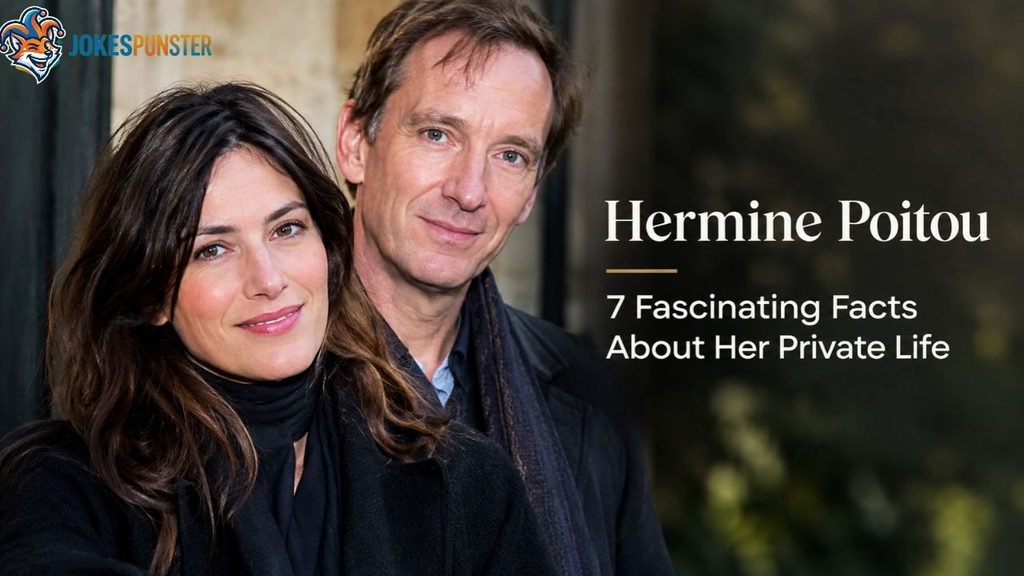
Hermine Poitou’s public profile offers an opportunity to think about the difference between being known and being understood.
People may recognize a name because it appears beside a famous actor. They may know a marriage date or a professional label. But those details do not reveal everything about the person behind the name.
That is true for many people, not only celebrity spouses.
A designer can contribute to a public project without becoming a household name. A writer can influence a reader without appearing on television. A person can have a meaningful professional and personal life without sharing every detail online.
Poitou’s documented design work makes this point more tangible. Her contribution to the Aimé Césaire station mural provides an example of creative work that people can encounter directly, whether or not they know much about its creators.
It also reminds readers that a biography does not need to contain every personal detail to be worthwhile. Sometimes, the most useful information concerns a person’s public work and the context in which it exists.
There is no need to turn a low public profile into a dramatic story about secrecy. Nor should privacy automatically be interpreted as a rejection of fame. Without a clear statement from the person concerned, such explanations would be speculation.
A more thoughtful lesson is simple: public visibility is only one way people become known, and it is not the only measure of a meaningful life.
Frequently Asked Question
Who is Hermine Poitou?
Hermine Poitou is a French designer and artist best known publicly as the wife of English actor David Thewlis.
Is Hermine Poitou married to David Thewlis?
Yes. David Thewlis married Hermine Poitou in 2016, according to published media reports.
What does Hermine Poitou do for a living?
Hermine Poitou is a designer. RATP credits her and graphic designer Catherine Félix with creating an illustrated mural at Aimé Césaire metro station in Paris.
When did Hermine Poitou and David Thewlis get married?
Hermine Poitou and David Thewlis reportedly married in 2016. The couple generally maintain a low public profile.
Why is Hermine Poitou not widely known?
Unlike David Thewlis, whose acting career receives extensive media coverage, Hermine Poitou has a more limited public profile. Reliable information about her personal life remains limited.
Final Thoughts
Hermine Poitou is often searched for because of her marriage to David Thewlis, the English actor known for roles in Harry Potter, Naked, and Fargo. Their marriage, reported in 2016, explains much of the public interest in her name. But her story becomes more informative when it includes her own creative identity.
RATP’s documentation of the Aimé Césaire station mural offers a concrete example of her design work. Created with Catherine Félix and other contributors, the illustrated mural connects a public transport space with the life, writing, and ideas of Aimé Césaire. It provides a meaningful point of reference beyond the familiar celebrity connection.
The contrast between Poitou’s limited public profile and Thewlis’s extensive acting career is worth exploring, but it should not become an excuse for speculation. Reliable biography means being clear about what is known, acknowledging what remains uncertain, and avoiding the temptation to invent details.
Ultimately, Hermine Poitou’s story illustrates an important point about creativity and recognition. Not every professional life needs to revolve around celebrity. Not every person connected to fame needs to become a public personality.
Sometimes, the most useful way to understand someone is to look at the work that can be documented, respect the details they have kept private, and resist the urge to turn every unanswered question into a story.




Pingback: Kai Musk: 7 Fascinating Facts About His Family and Life